
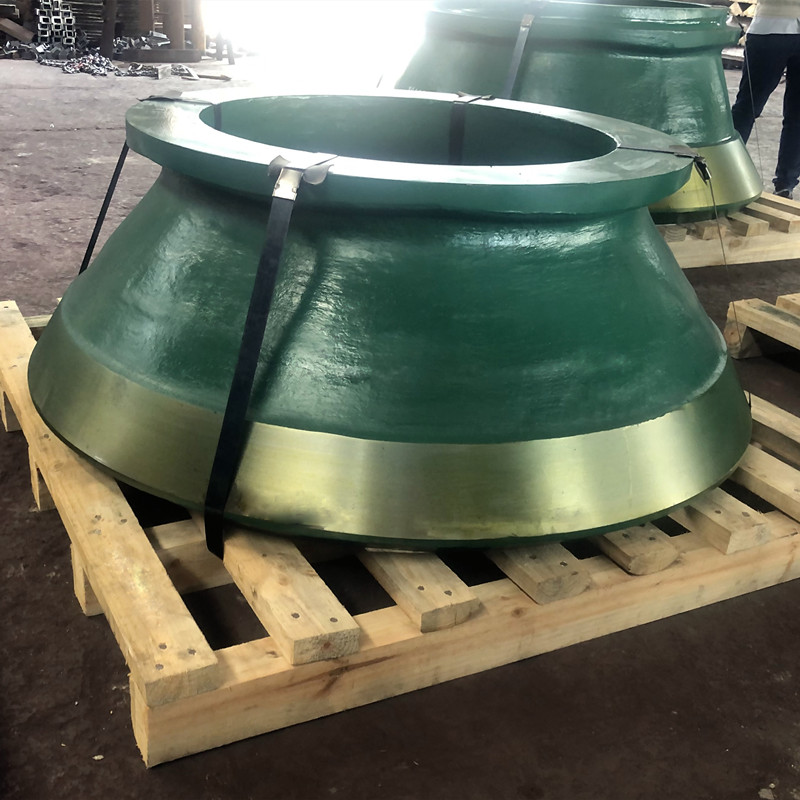
In the competitive field of engineering machinery, manufacturers continually seek innovations that can improve the durability, efficiency, and overall performance of their equipment. Recent trends indicate a growing emphasis on the development and application of advanced materials designed to extend the lifespan and reliability of critical machinery parts. Among these advancements, the use of tailored wearing solutions such as TiC (Titanium Carbide), ceramic, and chromium-inserted alloys stands out as a significant step toward meeting the rigorous demands of various industrial applications.
One notable player in this arena is a company specializing in high-performance engineered materials that cater directly to the needs of engineering machinery parts manufacturers. This company provides a wide range of standard and custom materials including manganese steel (Mn steel), high-chromium iron (Hi-Cr iron), alloy steel, and carbon steel. Their portfolio, however, extends beyond the conventional offerings with innovative tailored solutions aimed at improving the wear resistance and longevity of parts exposed to extreme conditions.
### The Need for Advanced Wearing Solutions in Engineering Machinery
Engineering machinery often operates in environments characterized by abrasive wear, high impact forces, and corrosive substances. Components such as excavator teeth, crusher parts, bulldozer blades, and other ground engaging tools are routinely subjected to harsh stressors that can significantly shorten their operational life. Frequent maintenance and part replacement not only escalate costs but also reduce equipment availability, adversely affecting productivity.
Addressing these challenges requires materials that combine hardness, toughness, and resistance to various types of wear such as abrasion, erosion, and impact. Standard steel grades have served the industry well; however, as operational demands increase, conventional materials no longer provide the optimal balance between performance and cost-efficiency.
### Innovative Materials from the Leading Manufacturer
Responding to the evolving requirements, the company offers manganese steel, known for its excellent toughness and work-hardening properties. Manganese steel parts adapt under impact and abrasive conditions by becoming harder while maintaining their ductility, thus making them well-suited for heavy-duty applications.
High-chromium iron alloys feature prominently in their range due to their superior hardness and wear resistance. These materials are especially effective in applications involving impact and sliding abrasion, where maintaining surface integrity is critical.
Alloy and carbon steels form the foundational materials for many structural components, offering versatility and ease of fabrication. However, to significantly enhance the lifespan of worn parts, the company has developed tailored wearing solutions incorporating TiC, ceramic, and chromium inserts into their base materials.
### Tailored Wearing Solutions: The Future of Durable Components
Titanium Carbide (TiC) is renowned for its extreme hardness and chemical stability, which makes it an excellent candidate for use in engineering components that experience severe wear. By inserting TiC particles into steel matrices, the company produces composite materials that dramatically improve resistance to abrasion and erosion. Such composites can maintain their structural integrity under high stress loads and prolonged use, significantly reducing downtime.
Ceramic materials offer another high-performance option. Their natural hardness and thermal stability make ceramic-inserted parts highly effective in environments where temperature fluctuations and chemical corrosion pose additional challenges. When combined with metal bases, these ceramic-enhanced components achieve a balance that enables both toughness and hardness, which are typically difficult to combine in conventional alloys.
Similarly, chromium-inserted alloys provide enhanced corrosion resistance and wear properties. Chromium forms a protective oxide layer on the surface of steels, which prevents further oxidation and degradation, extending the useful life of parts in corrosive environments.
### Application and Industry Impact
The adoption of these advanced materials is transforming engineering machinery performance across several key industries, including mining, construction, and materials processing. For instance, excavators utilized in mining operations benefit from the increased wear resistance of TiC and ceramic inserts in their bucket teeth, reducing replacement frequency and improving operational uptime.
In construction, bulldozers and graders require blades and cutting edges that can withstand high-impact, abrasive conditions. The tailored alloys provided deliver not only exceptional durability but also reduce the total cost of ownership by minimizing maintenance efforts and spares inventory.
Materials processing equipment such as crushers and grinders also capitalize on these innovations by incorporating high-chromium iron parts or TiC-enhanced components to handle the abrasive nature of raw materials efficiently.
### Commitment to Customization and Customer Needs
Recognizing that no two applications are exactly alike, the company prides itself on delivering customized solutions tailored to specific wear challenges and operational requirements. Their engineering team collaborates with clients to analyze the working environment, load conditions, and wear mechanisms before recommending the optimal material combination.
This consultative approach ensures that manufacturers receive parts that not only meet but exceed performance expectations, providing a competitive edge in their respective markets. Additionally, the company invests in continuous research and development to further refine their materials and broaden the range of available options.
### Conclusion
As the engineering machinery industry moves forward, the role of advanced materials becomes increasingly pivotal in achieving higher durability and efficiency. The integration of manganese steel, high-chromium iron, alloy steel, carbon steel, and especially the tailored wearing solutions involving TiC, ceramic, and chromium inserts, represents a promising advance in combating wear-related challenges.
Manufacturers who embrace these innovations are likely to benefit from prolonged service intervals, reduced maintenance costs, and enhanced equipment availability—all vital factors in maintaining competitiveness in today’s demanding industrial landscape. Through its commitment to quality, technology, and customization, the material supplier continues to support the growth and sustainability of engineering machinery parts manufacturers worldwide.